
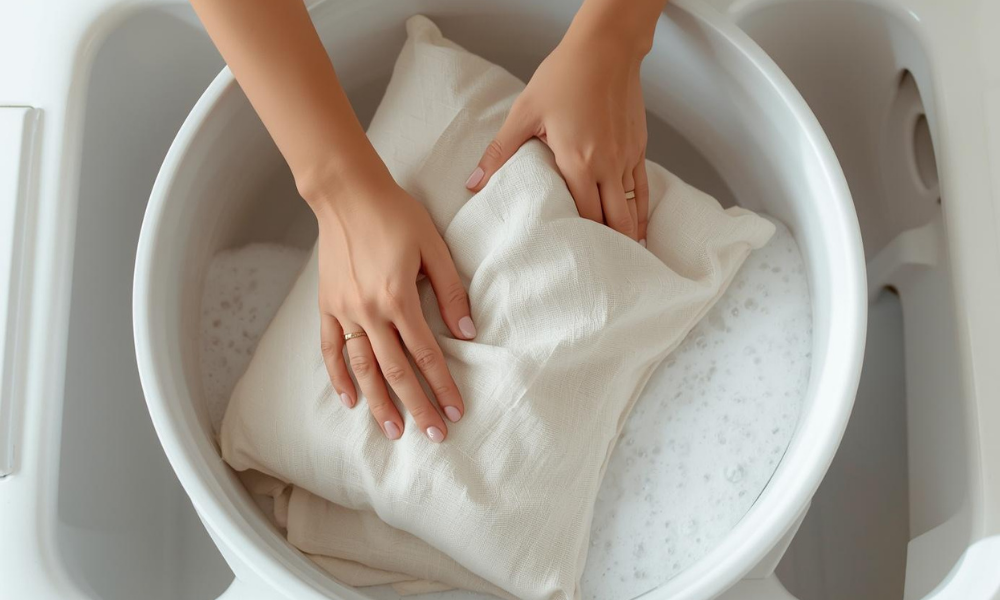
Linen cushion covers can transform any room into a calm, cosy space. But washing them the wrong way can shrink the fabric, dull the colour, or make them feel stiff. So, how to wash linen cushion covers without ruining them? Use cold water, a gentle cycle, and a mild liquid detergent. Always air dry, and never use bleach.
It really is that simple. Linen fabric care does not need to be complicated. You just need to understand how this natural fibre behaves and give it the right treatment. Get it right, and your covers will stay soft, fresh, and beautiful for years to come. But are you making one of the common mistakes that quietly damages linen over time?
Why Linen Cushion Covers Need Gentle Care
Linen comes from the flax plant. It is one of the toughest natural fabrics you can buy. It lasts for years. It gets softer the more you wash it. But heat and harsh chemicals are its biggest enemies.
Too much heat causes linen fabric shrinkage. Harsh soap wears the fibres down. The colour fades faster too. So before you toss your covers in the machine, it helps to know what you are dealing with.
What to Do Before You Wash
A little preparation before washing makes a big difference. These steps take less than a minute and protect your covers from unnecessary damage. Here are three things to do before every single wash:
Remove the Insert and Close the Zipper
Always take the cushion pad out first. Then zip the cover fully closed before placing it in the machine. An open zipper can snag the linen or pull at other fabrics in the wash. This one small step protects the cover before washing even starts.
Check the Care Label
Every cover is slightly different. The care label instructions will tell you the safe temperature and any special requirements. Always check it first. This is especially important for handmade or specialist cushion covers.
Flip the Cover Inside Out
Turn the cover inside out before it goes in the machine. This protects the outer surface from rubbing against other items. It keeps the colour brighter and the fabric looking newer for longer.
How to Machine Wash Linen Cushion Covers
Most linen cushion covers can go in the washing machine. You do not need to hand wash them. You just need to pick the right settings. Get this part right and your covers come out clean and soft every single time.
Here is exactly what to do, step by step, so nothing gets damaged in the wash:
Use Cold Water or 30 Degrees Maximum
Cold water washing is the safest choice for linen. It prevents shrinkage and protects the natural fibres. Never wash linen above 30 degrees. Even slightly higher heat can cause the cover to shrink or lose its shape.
Choose a Gentle or Delicate Cycle
Always use the gentle cycle for linen. A fast or heavy-duty cycle creates too much friction inside the drum. Over time, this weakens the weave. A slow, gentle spin keeps the fabric intact and looking its best.
Use a Mild Liquid Detergent
Choose a mild detergent for linen in liquid form. Powder detergents can get trapped in the natural texture of linen and leave behind a white residue. Skip the fabric softener too. Linen softens naturally with every wash all on its own.
Do Not Overcrowd the Machine
Having too many pieces in the wash also generates friction which causes linen to wear. Always wash your linen covers with light fabrics and do not overload the drum.
How to Dry Linen Cushion Covers Without Damage
The wash is important as well as drying. The majority of people burn their linen covers in heat inside the dryer.
Line Dry Away from Direct Sunlight
Hang or lay on the line to dry your covers. Do not expose them to direct sunlight. Fade by the sun is strong and deteriorates the fibres with time. It is ideal to use a dark area outside or a room with good ventilation.
Can You Use a Tumble Dryer?
A tumble dryer must be used as a final option. Should you need one, it should only be low heat tumble dry. Remove the covers while they are still slightly damp. This also makes ironing much easier if you decide to go that route.
How to Deal with Stains on Linen Cushion Covers
Stains happen. The key is to deal with them quickly. The faster you act, the easier the stain comes out. Stain removal for linen is straightforward as long as you stay calm and follow these steps.
Do not rub the stain. Ever. Rubbing pushes it deeper into the fabric. It can also stretch the weave and leave a mark that never fully goes away. Always blot gently instead.
For a fresh stain, press a clean cloth onto it to soak up as much as possible. Then dab a little cold water and a drop of mild liquid soap onto the spot. For older or stubborn stains, soak the whole cover in cold water for about 30 minutes before washing.
Never use bleach. It eats into linen fibres. It can also leave yellow stains that are impossible to fix. If your cover is worth keeping, bleach is never worth the risk.
If you own a natural cover like the Amara Natural, spot cleaning between washes keeps it looking its best. Natural fabric picks up everyday life, a little care goes a long way.
Should You Iron Linen Cushion Covers?
Linen naturally creases. It is something that makes it so attractive, that worn-out feel It feels relaxed and natural. If you are happy with a soft, lived-in texture, you do not need to iron at all.
But if you want a crisper, neater finish, iron the cover while it is still a little damp. Use a medium to high heat setting on your iron. Always iron on the back of the cover. Ironing on the front can leave shiny patches on the fabric.
A steamer works well too. It is quicker and gentler than a traditional iron. If your cover has an envelope-style back like the Alina Cushion Natural, getting it back on after ironing is easy. The open back design makes the whole process much less fiddly.
How to Store Linen Cushion Covers Properly
Storing linen covers properly between seasons keeps them fresh and ready to use whenever you need them. Never store linen in a plastic bag. Linen is a breathing fabric and needs airflow to stay in good condition.
Fold covers loosely and store them in a cool, dry place. A breathable cotton or linen bag works best. Add a small lavender sachet to keep everything smelling naturally fresh during storage.
How Often Should You Wash Linen Cushion Covers?
There is no one perfect answer. It depends on how much use your cushions get every day. For most homes, washing every two to three months is enough to keep things clean and fresh.
If your sofa gets heavy daily use or you have young children or pets around, once a month makes more sense. Regular washing is actually good for linen. The more you wash it gently, the softer it becomes.
Covers like the Beck Fennel are made for exactly this kind of regular home care. The cotton front and natural linen back hold up beautifully with consistent, gentle washing. You do not need to treat them like something delicate and precious. Just wash them right and they will keep going.
Does the Quality of Your Cover Make a Difference?
Yes. Absolutely yes. A well-made cover handles washing better than a poorly made one. It holds its shape. The colour stays truer. The seams do not fray. And the fabric gets softer rather than rougher with each wash.
Cheap covers often fall apart after a few washes. Quality covers last for years when you look after them. The Nori Matcha is a good example. It is made to be lived in. Wash it regularly. Use it every day. It only gets better over time.
If you want covers that are built for real everyday life, take a look at the full handmade cushions collection. Every piece is made by hand in the UK. Each one comes with clear care instructions so you always know exactly what to do.
Final Thoughts
How to wash linen cushion covers is not complicated. Cold water. Gentle cycle. Mild liquid soap. Air dry in the shade. That is the whole thing. Follow those steps and your covers will last for years. They will feel softer. They will look better. And you will never have to worry about ruining them again.





Leave a Comment
Your email address will not be published. Required fields are marked *