

Cushions reshape living rooms from basic to beautiful without draining your wallet. The British Interior Design Association’s recent survey revealed 78% of homeowners refresh their cushions twice yearly. Smart cushion placement delivers personality, comfort, and visual appeal to seating areas.
Mastering size selection and colour coordination requires understanding several core principles working in harmony. Grey sofas, Chesterfields, and sectionals gain impact through strategic cushion positioning. What divides a professionally arranged sofa from a cluttered mess?
Choosing the Right Cushions for Your Sofa
Selecting cushions demands attention to three crucial elements: fabric, colour, and combination strategy before arrangement begins.
Fabric Considerations
Cushion fabric must complement sofa upholstery. Textured sofas with bold prints pair well with solid-coloured cushions in striking shades. Leather sofas gain warmth through velvet or linen additions. Cotton cushions suit most sofa types and wash easily, making them ideal for families with children or pets.
Natural fabrics like linen and cotton breathe well and stay cool during warmer months. Textile experts note linen cushions reduce surface temperature by 3-5 degrees versus synthetic materials. Winter months call for woven cushion covers, adding luxurious warmth to seating spaces.
Colour and Tone Coordination
Neutral sofas allow experimentation with vibrant cushions. Mustard yellow, teal blue, or coral pink create bold statements. Dark sofas pair beautifully with cream, beige, or soft grey cushions, brightening the overall appearance. Interior designers recommend the 60-30-10 colour principle: 60% neutral shades, 30% secondary tones, and 10% accent colours for balanced visual impact.
Mix and Match Strategy
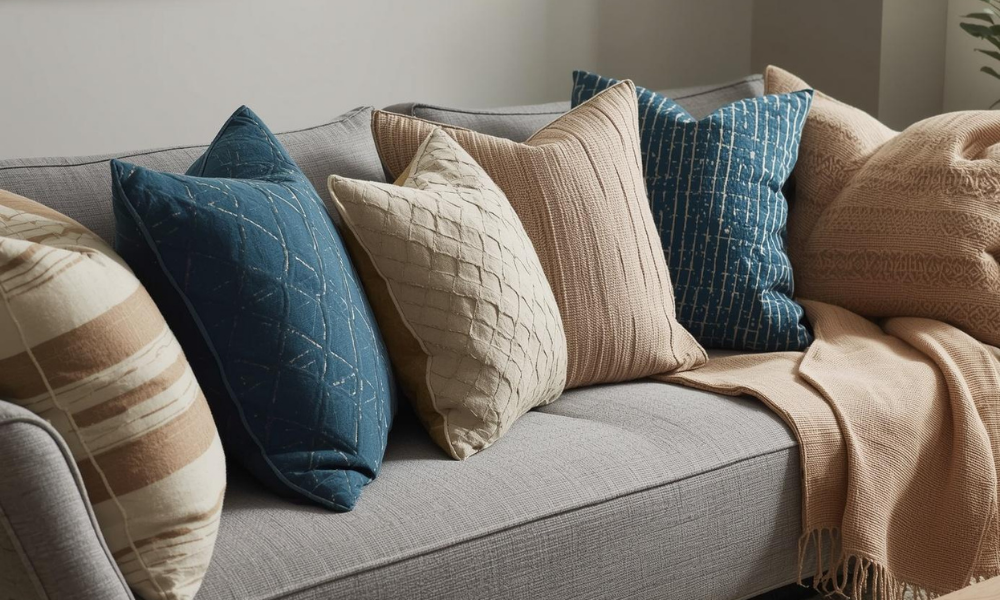
Combining patterns and textures shouldn’t intimidate you. Begin with one dominant pattern, such as large florals or geometric prints. Add smaller patterns in matching colours. Include solid colours, balancing everything. Research indicates rooms featuring three different textures feel 40% more welcoming than single-texture environments.
Understanding Cushion Sizes and Scale
Proper sizing creates professional-looking arrangements, avoiding overwhelmed or underwhelming appearances on your sofa.
- Common cushion dimensions include 60x60cm (Euro size), 50-55cm squares, and 40x60cm rectangular lumbar styles. Large 60x60cm cushions anchor the sofa corners. Medium 50cm squares fit middle positions perfectly. Lumbar cushions add variety whilst providing excellent back support and breaking visual lines.
- Standard three-seater sofas measuring 180-210cm wide need two 60cm cushions and three 50cm cushions for perfect balance. Cushions appearing lost seem too small. Those consuming seating space are oversized. Quality arrangements occupy roughly one-third of the sofa’s width.
Finding Your Ideal Cushion Quantity
Determining the correct cushion numbers balances aesthetics with practical functionality in living spaces.
- Two-seater sofas require three or four cushions maximum. Five cushions suit three-seater sofas perfectly, achieving balance without clutter. Large corner or four-seater sofas accommodate six to seven cushions comfortably.
- Interior stylists prefer odd numbers because human eyes find odd-numbered groupings more engaging and dynamic. Trust your visual judgment if four cushions suit your specific sofa better.
- Maintain adequate space for two people sitting comfortably without relocating cushions.
Cushion Arrangement Ideas and Placement Tips
The arrangement phase unites all cushion selections into cohesive, magazine-worthy displays, remaining practical for daily living.
Symmetrical vs Asymmetrical Balance
Symmetrical: Mirror-image arrangement where cushions on both sides match in size, pattern, and placement.
Asymmetrical: Unmatched arrangement where cushions vary in number, size, or placement from one side to the other.
Symmetrical arrangements excel in traditional living rooms, creating neat, organized atmospheres. Position matching cushions at each sofa end, progressing toward the centre. This style suits formal spaces and Chesterfield sofas perfectly. Asymmetrical arrangements feel relaxed and contemporary. Position three cushions on one side and two on the other, or vary sizes at each end. This approach complements modern cushion designs and modular sofas wonderfully.
Layering for Depth
Professional interior designers always layer cushions back to front. Position your largest cushions (55-60cm) at the back corners. Place medium-sized cushions (45-50cm) in front of these. Add small lumbar or 40cm square cushions at the very front. This technique creates depth, making sofas appear fuller and more inviting. Top hotels have employed layering techniques for decades because they photograph beautifully and feel luxurious.
Shape Variety
Avoid limiting yourself to square cushions exclusively. Rectangle lumbar cushions (measuring approximately 30x50cm or 40x60cm) interrupt square shapes whilst providing excellent lower back support. Round cushions soften the straight lines and angles of sofas and rectangular cushions. Use one round cushion as a focal point among square options. Bolster cushions work beautifully on sofa arms, creating elegant finishing touches.
Mixing Patterns, Textures, and Colours
Pattern mixing intimidates many homeowners, yet following straightforward formulas makes the process remarkably simple and successful.
- The 60-40 pattern principle works perfectly: utilize 60% solid-coloured cushions and 40% patterned options. This prevents sofas from appearing too busy whilst maintaining interest. For texture mixing, combine smooth cotton with chunky knit, or pair sleek velvet with rough linen. Texture contrast adds depth that patterns alone cannot achieve.
- Select three colours maximum for cushion collections. Pick one primary colour (typically from sofas or walls), one secondary colour, and one accent colour for pop. Botanical prints and geometric patterns trend in 2024, with searches for these designs increasing 67% compared to last year. Nature-inspired colours like sage green, terracotta, and warm beige prove particularly popular currently.
Seasonal Updates and Practical Maintenance
Maintain living room freshness throughout the year with simple seasonal swaps requiring no complete cushion collection overhauls.
- Build base collections of neutral cushions in cream, grey, or beige, working year-round. Then invest in two or three seasonal covers swapping easily. Summer calls for light linen covers in whites, blues, or yellows. These colours reflect light, making spaces feel cooler. Winter demands rich velvet or wool cushions in deeper colours like burgundy, forest green, or navy blue.
- Store off-season cushion covers in vacuum bags, saving space and protecting them from dust. Storage organization experts’ studies found that proper cushion storage extends their lifespan by up to five years. Choose machine-washable cushion covers for easy maintenance. Most designers recommend washing cushion covers every three to four months, keeping them fresh and hygienic.
Common Mistakes to Avoid
Understanding frequent styling errors helps achieve professional-looking results from your first attempt.
- The biggest mistake involves overcrowding sofas with excessive cushions. If guests need to remove half your cushions just to sit down, you have too many.
- Ignoring sofa style creates visual chaos, chunky knit cushions don’t suit sleek modern sofas, and ultra-modern geometric prints clash with traditional Chesterfield sofas.
- Using too many different colours and patterns fragments spaces, making them feel messy rather than styled. Stick to your three-colour principle. Forgetting comfort represents another common error.
- Cushions should feel good to lean against, not just appear pretty. Choose cushions with quality inner pads maintaining their shape. Feather and down inserts (typically 80% feather, 20% down) are softer and more durable than inexpensive polyester filling.
Conclusion
Styling cushions on your sofa requires neither complicated techniques nor substantial financial investment. Begin with appropriate cushion numbers for your sofa size, mix patterns carefully using the 60-40 principle, and layer different sizes from back to front. Remember that superior cushion arrangements balance beauty with comfort, working for how you actually live, not just how things appear in magazines.
Choose quality fabrics suiting the season, stick to three colours maximum, and embrace texture mixing for depth and interest. Your living room should feel welcoming and reflect your personal style. Update your cushions seasonally, keeping your space feeling fresh without requiring complete makeovers.
Transform your living space today with our stunning collection of premium cushions and home accessories at Rumi Interiors – shop now for style that lasts.




Leave a Comment
Your email address will not be published. Required fields are marked *