

Linen cushions add a touch of sophistication to your home while offering comfort that improves with time. These natural fabric pieces have become increasingly popular among homeowners who value both style and durability.
Yet many people struggle with maintaining their linen cushions properly, unsure whether to wash them frequently or leave them be. The truth is, caring for linen differs significantly from caring for synthetic materials or cotton.
With the right approach, your linen cushions will develop that sought-after softness while maintaining their structural integrity for decades. Have you ever wondered why some linen cushions look beautifully aged while others appear worn out after just a few months?
Understanding Your Linen Fabric
Flax plants need merely 100 days before they’re ready for harvest, making them remarkably efficient crops. Workers then transform these fibres into fabric that strengthens your furniture while becoming increasingly comfortable. Pure linen can absorb a fifth of its weight in moisture without feeling wet to the touch, which explains why it works so well for cushions in busy living spaces.
The antibacterial properties occur naturally in the fabric itself. Scientists have documented that linen prevents bacterial growth at rates nearly 70% better than cotton alternatives. People with skin sensitivities or allergy concerns often find linen cushions provide relief where other materials fall short.
Something remarkable happens as linen ages. Fresh fabric might feel somewhat stiff initially, but washing it three to five times creates noticeable softness. The fibres relax and mould to your touch without sacrificing any durability.
Daily Care: Keep Them Fresh
Building simple habits into your routine makes an enormous difference in cushion longevity and appearance.
Plumping and Rotating
Each morning, grab your cushions and give them a firm shake and plump. Ten seconds of effort prevents those annoying flat spots and keeps wear patterns even. Weekly rotation ensures all sides receive equal pressure. Think about how mechanics rotate vehicle tyres for even tread wear – your cushions benefit from identical logic.
Quick Dust Removal
Your vacuum’s soft brush attachment becomes your best friend here. Once weekly, gently run it across cushion surfaces to lift away accumulated dust, stray pet hair, and food crumbs. This prevents particles from working their way deep into the weave. Removing the cushion insert first lets you clean the cover thoroughly without compressing the filling.
Position cushions away from windows where direct sunlight hits for extended periods. More than two or three hours of UV exposure daily will gradually fade colours, particularly darker tones.
Tackling Stains Right Away
When spills happen on linen, your response time determines the outcome.
- Immediately press a clean, dry cloth against the affected area. Rubbing creates the opposite effect you want; it forces stains deeper into the weave. Dabbing from the outer edges inward contains the spill and prevents it from spreading further.
- Create a gentle cleaning solution by mixing one teaspoon of mild dish soap into two cups of cold water. Dip your cloth into this mixture and carefully dab the stain. Pouring detergent straight onto fabric risks discolouration or residue buildup. Testing your solution on a hidden section first protects you from surprises.
- Red wine or coffee spills require quick action. Sprinkle salt immediately to draw out liquid, then follow up with your soap solution. Research indicates that addressing stains within five minutes can eliminate up to 90% of common household spills.
Washing Your Linen Cushion Covers
Gentle washing techniques preserve the quality and extend the life of your linen cushion covers.
Hand Washing Method
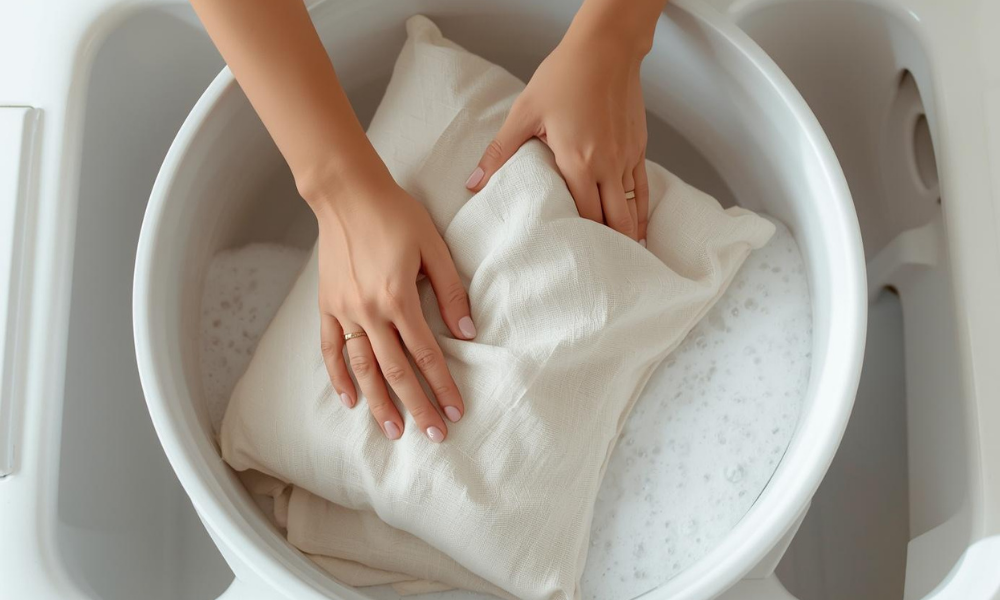
Fill your basin with cool water, keeping temperatures at or below 30°C (86°F). Add a small quantity of gentle, liquid detergent. Swish the water around until the detergent dissolves completely before introducing your cushion cover.
Move the cover through the water gently for three to five minutes. Twisting or wringing damages wet linen fibres, despite their strength when dry. Rinse multiple times in fresh, cool water until you see no soap residue. Detergent left behind makes fabric feel stiff and uncomfortable.
Machine Washing Guidelines
Select your machine’s delicate cycle with cold water. Closing zippers before washing prevents them from catching and tearing the fabric. Washing your cushion covers separately from heavy items like towels or denim protects them from excessive agitation.
Embroidered or delicate cushions benefit from mesh laundry bags. This added layer shields them from damage during the wash cycle. Cut your normal detergent amount in half; linen requires less soap than you might expect to achieve cleanliness.
High-use cushions need washing every two to three weeks. Decorative pieces in less-trafficked areas can wait four to six weeks between cleanings.
Drying Without Damage
Tumble dryers and linen create a terrible combination. High heat triggers shrinkage between 10-15% while weakening the fibres significantly.
- Hang your cushion covers on a clothesline or drying rack instead. Linen’s natural properties allow it to dry relatively quickly, typically within two to three hours when air circulates well. Lying flat works even better if you have adequate space, as this method prevents any stretching.
- Direct sunlight during drying causes problems despite seeming helpful. UV rays fade colours and make fibres brittle over time. Find a shady spot with good airflow for optimal results.
- Want faster drying? Gently squeeze excess water out before hanging. Skip the twisting motion; simply press the fabric between two clean towels to remove moisture.
Getting Wrinkles Out
Wrinkles appear easily in linen, though many people appreciate this characteristic as part of its natural appeal. If you prefer smoother cushions, several techniques work effectively.
- Ironing while the fabric remains slightly damp produces the best results. Set your iron to the highest heat setting (typically labelled “linen”). Placing a clean cotton cloth over embroidered sections protects delicate details from direct heat.
- Working from the reverse side when possible prevents shine marks from appearing on the visible surface. Keep your iron moving steadily – letting it rest in one spot risks scorching.
- Steamers offer a gentler alternative that works wonderfully on linen. Hold the steamer two to three inches from the fabric and move it in smooth, continuous strokes. This approach saves time while being kinder to the fibres.
Keeping Shape and Size
Pre-washed linen experiences minimal shrinkage, typically under 3%. Proper care maintains your covers’ perfect fit over time.
After washing, gently stretch the cover along its seams while dampness remains. This helps maintain original dimensions. Slipping the cover back onto the cushion insert while slightly damp allows it to dry into the ideal shape.
Wet linen can stretch temporarily, but it returns to its normal size during drying. Your cushion covers might feel snug immediately after washing. Within 24 hours, they’ll relax and fit comfortably again.
Smart Storage Solutions
Proper storage maintains cushion freshness during periods of non-use.
Choose cool, dry locations with adequate air circulation. Damp basements and hot attics both create problems. Breathable cotton bags work better than plastic containers, plastic traps moisture and encourages mildew growth.
Confirm that cushions have dried completely before storing them. Even slight dampness can develop into musty odours or mould problems. Adding a sachet of lavender or cedar chips keeps stored items smelling pleasant.
Stacking heavy objects on top of stored cushions creates permanent creases that resist removal.
Caring Through the Seasons
Your linen cushions need different attention as seasons change throughout the year.
Summer months bring increased dust and perspiration. Washing cushions every two weeks during hot weather addresses these challenges. Linen’s natural moisture-wicking properties work overtime when temperatures rise.
Winter heating systems can dry out fabrics significantly. Using a humidifier in rooms with linen cushions maintains optimal moisture levels. This prevents fibres from becoming brittle and prone to damage.
Spring and autumn create perfect conditions for deep cleaning. Taking covers outside on breezy days provides natural freshening. Gentle air circulation removes any stored odours accumulated over previous months.
When to Call Professionals
Certain situations warrant expert assistance rather than home cleaning attempts.
Heavily embroidered or beaded cushions typically require dry cleaning services. Embellishments can suffer damage during regular washing processes. Care labels stating “dry clean only” should always be followed precisely.
Antique or valuable linen pieces deserve professional attention. Specialists possess appropriate tools and knowledge for cleaning delicate items safely. Professional cleaning typically costs between £8-£15 per cushion cover, though this investment protects valuable pieces.
Set stains resisting home treatment should go to professionals. Commercial-grade products available to them can tackle tough marks without risking fabric damage.
Enjoy Your Beautiful Linen Cushions
Proper care transforms linen cushions into increasingly beautiful pieces over time. Each wash softens them further, developing a lovely patina that adds character to your living space. Natural fibres continue breathing, staying fresh, and lasting for decades when treated correctly.
Remember these essential points: wash gently in cool water, air dry away from direct sun, and embrace the natural texture that makes linen special. Your cushions will reward you with years of comfort and enduring style.




Leave a Comment
Your email address will not be published. Required fields are marked *