

A cushion does more than fill an empty corner of your sofa. It sets the mood of a room, adds texture, and tells people something about your taste. The question of handmade vs mass produced cushions comes down to more than price. It comes down to quality, longevity, and what kind of home you want to build around yourself.
Handmade cushions are cut, sewn, and finished by skilled hands using carefully chosen fabric. Mass-produced ones are processed by machines at volume, with consistency as the priority rather than craft. Both serve the same basic purpose, but the experience of living with each one is worlds apart. Have you ever wondered why some cushions still look beautiful after five years while others fall flat within months?
The Making Process: Craft vs. Conveyor Belt
Every handmade cushion starts with a real person sitting down with fabric, thread, and care. The maker cuts each piece by hand, checks the edges, and sews with attention to every small detail. Artisan craftsmanship takes time. That time shows in the finished piece.
The cutting, stitching and finishing are done by a machine in seconds. Thousands of the same pieces are produced each hour. Speed is the goal, not quality. And where speed is wanted, little issues are overlooked each and every time.
Materials Matter More Than You Think
The fabric is where you really start to see the difference. It is one of the most critical things that most people do not ever consider knowing what their cushion is made out of.
Natural Fibres in Handmade Cushions
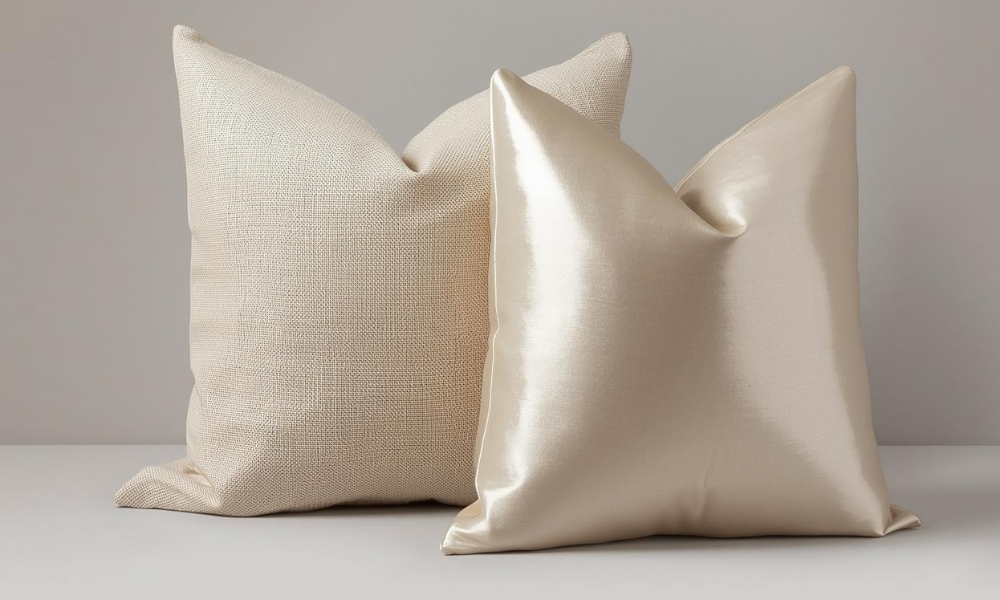
Homecrafts Cushions typically are made of natural linen, organic cotton or wool. These are breathable and soft fabrics. They improve, but they do not get worse. A good example is the Nori Matcha Cushion, it is a natural fiber that creates a calming, quiet effect in any room.It does not scream to be noticed. It just makes the space feel right.
What Goes Into Mass Produced Cushions
Factory cushions are mostly made from synthetic fabrics like polyester. These are cheap to buy and fast to process. But they trap heat, feel rough after a few washes, and start to look tired very quickly. The low price starts to feel less like a deal once you are buying a replacement within a year.
Unique Character vs. Uniform Looks
No two handmade cushions are exactly the same. Small changes in weave, stitch, or colour make every piece feel personal. That is not a flaw. That is the whole point. Handcrafted home textiles bring a sense of life to a room that factory pieces simply cannot match.
Mass produced cushions look the same on every shelf in every shop. There is nothing wrong with that if you want something quick and cheap. But if you want your home to feel like yours, uniform just does not cut it.
The Aveline Vintage Cushion in Golden Beige is a good example of what character really looks like. Its washed damask print feels timeless. It looks like it has always belonged in the room.
Which One Actually Lasts Longer?
A cheap cushion looks fine on day one. But after a few months, the seams start to go. The fabric thins out. The filling goes flat. You end up spending more money replacing it than you would have spent buying something well made in the first place.
Durable home cushions made by hand use stronger stitching and better fabric. They hold their shape and colour for years. When you look at the cost over time, a handmade cushion is always the smarter buy.
The Sustainable Choice for Your Home
People in the UK are buying with more thought than ever before. Sustainable homeware is not a trend anymore. It is a shift in how people think about their homes and the world around them.
When you choose a handmade cushion, you support a real maker. You choose eco-friendly textiles over synthetic waste. You slow down the cycle of cheap buying and fast throwing away. Every small choice like this adds up to something much bigger over time.
How to Spot a Truly Handmade Cushion When Shopping
Not all items that have the label artisan on it are made by a person. That word is vaguely used in some brands.These are some of the things that you can easily check before purchasing anything.
Check the Stitching and the Fabric
Run your fingers along the seam. Hand-stitched seams have a slight natural variation to them. They are not perfectly mechanical. Also feel the fabric. Natural linen and cotton cushion covers feel soft but slightly textured. Synthetic fabric feels too smooth or stiff by comparison.
Read the Label Carefully
Look for words like “small batch” or “handcrafted in the UK.” These are honest signals. Small batch production means someone took time with your cushion. It was not rushed. The Amara Natural Cushion is a great example of this. Simple, natural, and made with real care from start to finish.
Which Should You Choose?
And when you want something that feels good and complies long and makes your home feel like home instead of a showroom, handmade is the direction to take. It is not just a cushion. It is a better way to fill your space.
Browse the full collection of handmade UK cushions at Rumi Interiors. Every item is designed to order, using natural fabrics and constructed to add actual warmth into your home over the coming years.
Leave a Comment
Your email address will not be published. Required fields are marked *